 Call :
  Email :



Logistics Aggregator Company
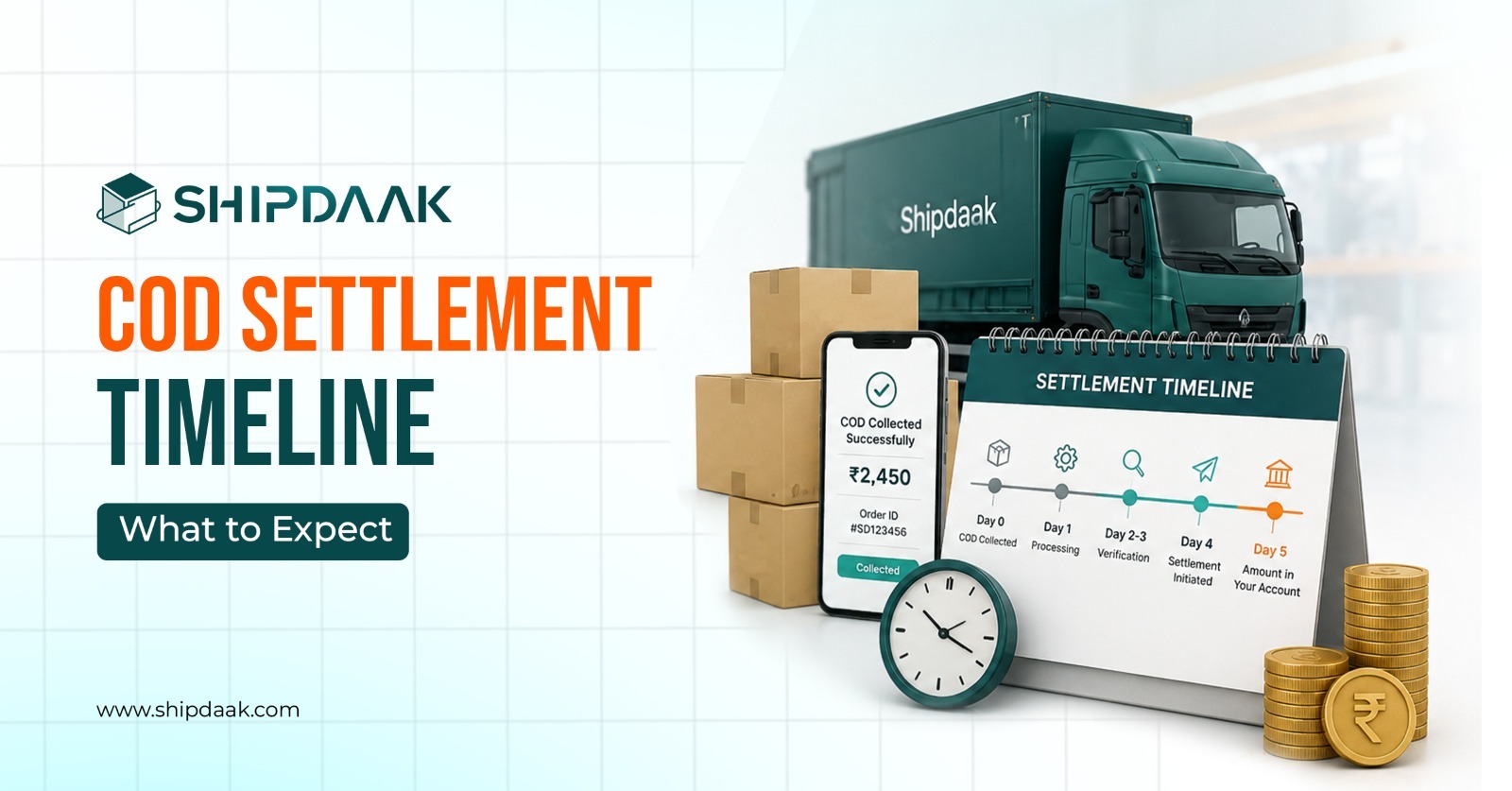
Shipdaak COD Settlement Timeline: What to Expect
Shipdaak COD Settlement Timeline: What to Expect
Cash on Delivery (COD) remains one of the most trusted payment modes for e-commerce buyers across India and one of the most operationally demanding for logistics partners to manage. For sellers evaluating or currently working with Shipdaak, understanding how COD remittance actually works, the steps involved, the typical timelines, and the factors that can cause delays is essential to planning cash flow and setting realistic expectations.
This piece breaks down the COD settlement process end-to-end, based on standard industry practice for logistics aggregators, so sellers know what a healthy remittance cycle should look like and what questions to ask their courier partner.
How COD Remittance Works, Step by Step
A COD shipment goes through several checkpoints before the cash collected from a buyer reaches the seller's account:
- Delivery confirmation – The courier partner marks the order as delivered and collects payment from the customer.
- Cash reconciliation – The field agent or courier hub deposits the collected cash, which is then reconciled against the order manifest.
- Remittance processing – Once reconciled, the logistics aggregator batches COD amounts for transfer to the seller's registered bank account.
- Bank transfer & confirmation – Funds are transferred, typically via NEFT/IMPS, and the seller receives a remittance report matching order IDs to amounts.
Each of these steps has its own internal SLA (service-level agreement), and the overall settlement timeline is the sum of all four.
Typical COD Settlement Windows
Industry-standard COD remittance cycles for logistics aggregators in India generally fall into one of these patterns:
- Weekly remittance cycles – Common for high-volume sellers, with funds released 7–10 days after delivery confirmation.
- On-demand or T+X cycles - Some aggregators offer accelerated remittance (e.g., T+2 or T+3 business days) for verified, high-trust sellers, often at an added service cost.
Sellers should confirm which cycle applies to their account directly in their Shipdaak service agreement or seller dashboard, since remittance frequency can vary by seller tier, order volume, and category.
Common Reasons for COD Delays
Even in a well-run remittance process, delays can occur. Sellers should be aware of the most common causes so they can distinguish a normal processing lag from a genuine issue:
- Reconciliation mismatches - when the delivered amount doesn't match the manifest due to partial payments, discount adjustments, or return-in-transit orders.
- Bank verification issues - incorrect IFSC codes, account name mismatches, or unverified bank details on file.
- Return/RTO overlap - orders marked delivered but later flagged as return-to-origin, which can freeze that specific remittance line until resolved.
- Bulk order spikes - high-volume periods (like festive sales) that increase reconciliation backlog.
- Documentation gaps - GST or KYC details pending renewal on the seller's account.
If a delay extends beyond the stated cycle without a clear reason communicated by the aggregator, that's a legitimate point for escalation — and a transparent logistics partner should be able to explain exactly where in the four-step process a specific payment is stuck.
What Sellers Should Ask Before Onboarding
Given how much COD remittance affects working capital, sellers should get clear, written answers to these questions before signing on with any logistics aggregator, including Shipdaak:
- What is the stated remittance cycle (weekly, T+X)?
- Is there a dashboard or report that shows real-time COD reconciliation status per order?
- What is the escalation path and expected response time if a payment is delayed beyond the stated cycle?
- Are there penalties or SLAs the aggregator commits to if remittance is late?
- How are RTO and partial-payment orders handled in the remittance report?
A seller who has these answers in writing — not just verbally — is in a much stronger position if a dispute arises later.
Why Transparency Matters Here
COD remittance delays are a well-documented pain point across the logistics aggregator industry in India, and seller forums frequently discuss experiences — both positive and negative — with different providers. For any aggregator, the credibility of its COD process rests on:
- Verifiable data - real-time tracking of where a payment is in the pipeline, not just a promised date.
- Consistent communication - clear, proactive updates when a cycle is delayed, rather than silence.
- Accountability - a named escalation contact and a defined resolution timeframe.
Sellers evaluating any logistics partner — Shipdaak included — should weigh public reviews alongside the provider's own documentation, and should request current SLA commitments directly rather than relying solely on marketing claims.
Final Takeaway
A healthy COD settlement process should be predictable: a known cycle, a visible reconciliation trail, and a responsive escalation path when something goes wrong. Sellers working with Shipdaak or any other logistics aggregator should treat these as non-negotiable baseline expectations, and should raise concerns directly with account management if remittance falls outside the agreed timeline.
—----------------------------------------------------------------------------------------------
Frequently Asked Questions
1. How long does Shipdaak take to remit COD payments?
Remittance timelines depend on the cycle assigned to a seller's account — typically weekly, and T+X window for verified high-volume sellers. Sellers should confirm the exact cycle stated in their service agreement rather than assuming a standard timeframe applies.
2. What causes a COD payment to be delayed beyond the usual cycle?
Common causes include reconciliation mismatches, incorrect or unverified bank details, orders overlapping with return-to-origin (RTO) status, high-volume order spikes during sales periods, and pending KYC or GST documentation on the seller's account.
3. How can I track the status of a specific COD remittance?
A transparent aggregator should provide a dashboard or downloadable report showing real-time reconciliation status per order ID, so sellers can see exactly where a payment sits in the four-step remittance process rather than waiting on manual updates.
4. What should I do if my COD payment is delayed beyond the committed timeline?
Sellers should first check the reconciliation status against their order manifest, then raise the delay through a documented escalation channel. A reliable partner should be able to point to the specific stage — reconciliation, bank transfer, or verification — where the payment is held up, and give a resolution timeframe in writing.
5. Does an RTO or partially paid order affect COD remittance?
Yes. Orders flagged as return-to-origin after being marked delivered, or orders with partial cash collection, are typically held separately during reconciliation until the discrepancy is resolved, which can delay that specific remittance line without affecting the rest of the batch.
6. What should sellers confirm before onboarding with a logistics aggregator for COD orders?
Before onboarding, sellers should get written confirmation of the remittance cycle, access to real-time reconciliation reporting, the escalation process for delays, any SLA penalties for late payments, and how RTO or partial-payment orders are reflected in remittance reports.


